Australian Workplace Fatalities 2024: Fatality Trends
Significant Reversal Following Elevated 2023 Figures
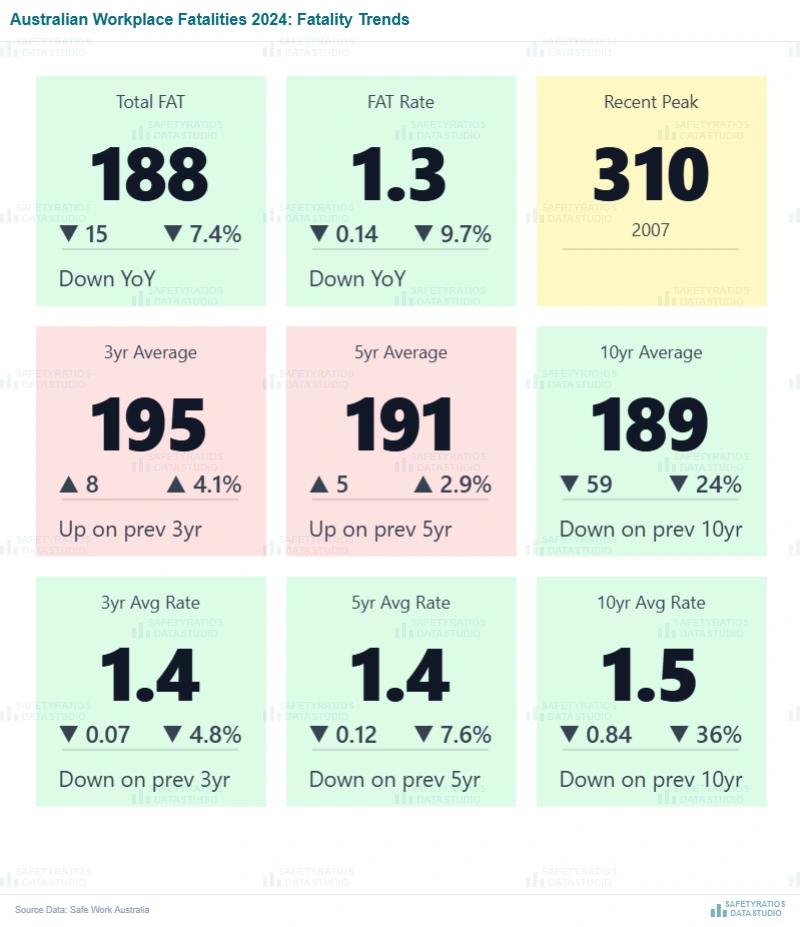
Australia recorded 188 workplace fatalities in 2024, down from 203 in 2023, marking a significant reversal following the elevated fatality figures recorded the previous year.
The national workplace fatality rate also declined from 1.4 to 1.3 fatalities per 100,000 workers, representing one of the clearest downward shifts visible across the recent dataset.
2024 Reversed the Elevated Fatality Trend Seen in 2023
The 2024 figures sit notably below the levels recorded in 2023, with workplace fatalities falling by 15 deaths year on year.
This reduction materially altered the direction of the shorter term trend data.
The latest figures moved:
- below the current 5 year average of 192
- almost level with the 10 year average of 189
- while significantly lowering the rolling fatality rate averages
The decline is particularly notable because it followed a year in which both fatalities and fatality rates had moved upward simultaneously.
Looking at the latest data in sequence, 2024 appears to have interrupted the upward movement that became visible in 2023 and shifted the broader trend back toward the longer term downward trajectory.
Looking Back, 2023 Now Appears as the Localised Spike
From the perspective of the 2024 figures, the elevated results recorded in 2023 now stand out more clearly within the recent trend sequence.
Australia recorded:
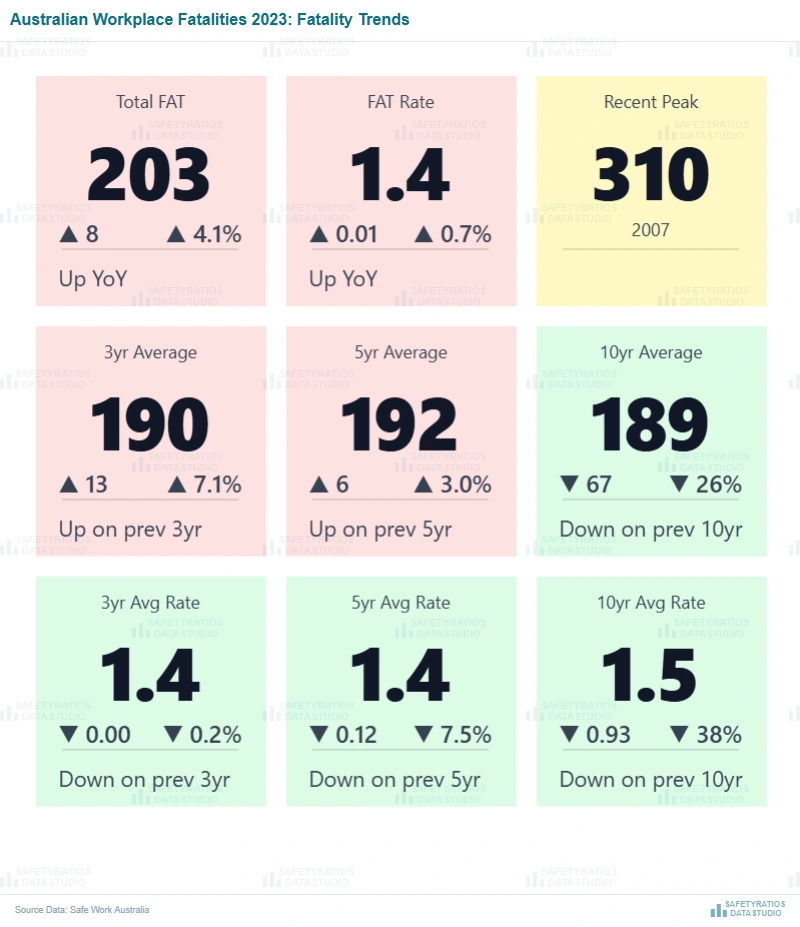
- 203 workplace fatalities
- a 1.4 fatality rate
during 2023, producing increases across both annual totals and rolling averages.
Those increases pushed:
- the 3 year average fatalities to 190
- the 5 year average fatalities to 192
while also lifting the shorter term fatality rate averages.
Viewed historically from 2024, the 2023 figures now appear less like the beginning of a sustained upward trend and more like a temporary spike within a broader long term decline.
2022 Had Already Begun Pressuring the Medium Term Averages
Looking further back, the elevated figures recorded in 2022 had already begun influencing the rolling averages before the sharper increase emerged in 2023.
Australia recorded:
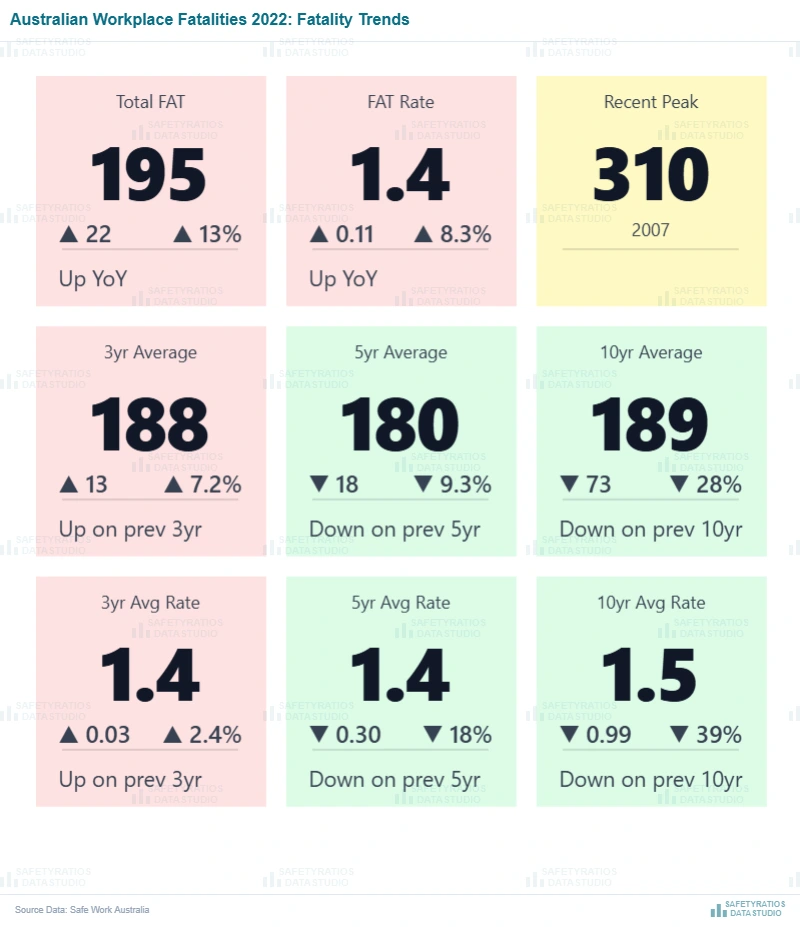
- 195 workplace fatalities
- a 1.4 fatality rate
in 2022, alongside a substantial year on year increase in both fatalities and rates.
The 2022 figures pushed:
- the 3 year average fatalities upward to 188
- the 3 year average fatality rate upward to 1.4
while the longer term:
- 5 year averages
- 10 year averages
continued trending downward.
This split in the data was significant because it showed shorter term deterioration emerging even while the broader decade trend remained structurally lower than earlier historical levels.
Long Term Fatality Trends Remained Lower Despite Recent Increases
Despite the elevated figures recorded across both 2022 and 2023, the broader decade trend in workplace fatalities continued pointing downward in 2024.
The latest data shows:
- the 10 year average fatalities remained at 189
- the 10 year average fatality rate remained at 1.5
Both measures remained substantially below earlier historical periods, including the previous fatality peak of 310 workplace deaths recorded in 2007.
This longer term stability is important because it suggests the increases recorded during 2022 and 2023 had not fundamentally reversed the broader structural decline visible across the wider dataset.
Fatality Rates Shifted Lower Again in 2024
One of the clearest movements in the 2024 data was the reduction in the fatality rate itself.
After increasing to 1.4 in both 2022 and 2023, the rate declined back to 1.3 in 2024.
This reduction lowered:
- the 3 year average fatality rate
- the 5 year average fatality rate
- the long term trend trajectory
and marked the first meaningful downward shift following two consecutive years of elevated fatality rates.
Viewed in hindsight, the 2024 figures now appear to have marked the point where the recent upward pressure across the dataset began easing back toward the broader long term trend.
Frequently Asked Questions
How did Australian workplace fatalities change in 2024?
Australia recorded 188 workplace fatalities in 2024, down from 203 in 2023. The workplace fatality rate also declined from 1.4 to 1.3 fatalities per 100,000 workers, reversing the increase recorded the previous year.
Why was the 2024 workplace fatality result significant?
The 2024 figures marked a notable shift following the elevated fatality levels recorded in 2023. Both total fatalities and the fatality rate declined, lowering the short and medium term trend averages across the dataset.
How did 2024 compare with longer term workplace fatality trends?
The 2024 fatality total of 188 sat below the 5 year average of 192 and close to the 10 year average of 189. The broader long term trend remained substantially below the historical peak of 310 fatalities recorded in 2007.
What do the rolling workplace fatality averages show in 2024?
The rolling averages showed a mixed pattern in 2024. Shorter term averages remained elevated following the increases recorded in 2022 and 2023, while the longer term 10 year fatality averages continued trending downward.
Did workplace fatality rates improve in 2024?
Yes. The national workplace fatality rate declined from 1.4 in 2023 to 1.3 in 2024. This lowered the 3 year and 5 year average fatality rate trends and marked the first meaningful reduction following two consecutive years of elevated rates.