Field Brief on Respect
PAPA Said: Respect is the bedrock of a resilient culture
This field brief explores respect as a foundational principle in organisational culture and safety culture. It examines how respect shapes the assumptions, predispositions, and everyday actions that influence how people work together.
Within the LDP framework, respect operates in the Living (Field) layer, where cultural principles become visible through daily behaviours, leadership choices, and operational practices.
Respect as a Core Principle
Respect shapes how we work and lead every day
- Valuing People: Every person matters, regardless of role, history, or familiarity
- Recognising Unique Contribution: Each individual brings distinct experiences, insights, and capabilities
- Holding Worth Through Mistakes: Even when behaviour fails, the person retains their value
- Honouring the Unfamiliar: Treat those you don’t know with the same baseline respect as those you do
- Seeing Beyond the Role: Value the human being, not just the job title or function
- Belief in Potential: Trust that everyone has the capacity to grow, improve, and contribute meaningfully
From Respect to Action
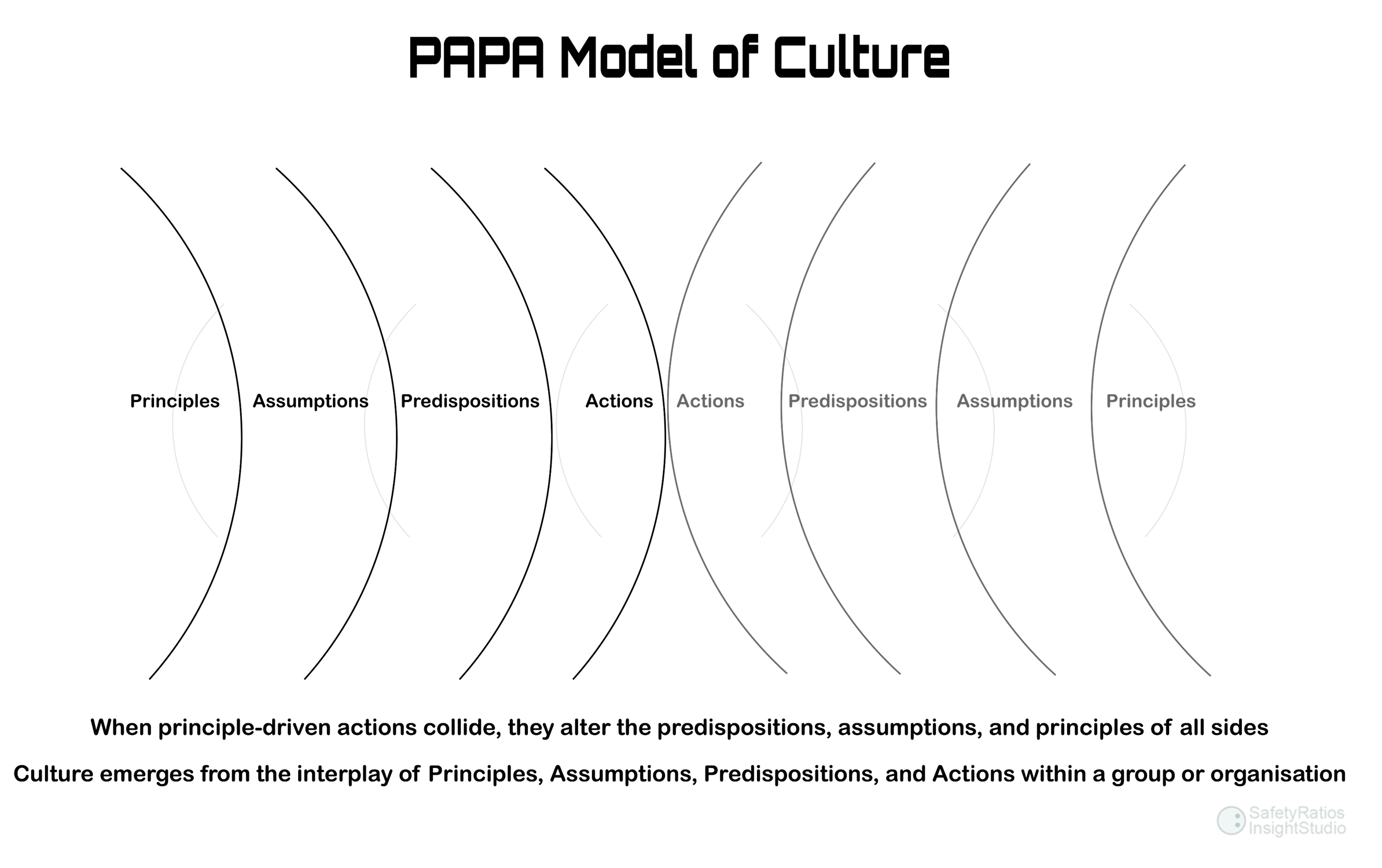
Outward flow of influence from Principle to Action
- Respect feeds good assumptions: Every person has worth and can add value
- Good assumptions create positive predispositions: A natural readiness to involve others and listen openly
- Positive predispositions lead to constructive actions: Protect dignity, encourage participation, and recognise contributions
- When respect is weak: Assumptions drift toward exclusion, predispositions toward control, and actions toward dismissal
- Consistent respectful actions: Strengthen the principle until it becomes part of culture
From Action Back to Respect
Inward flow of influence from Action back to Principle
- Actions influence predispositions: Frequent positive acts incline us to openness; repeated negatives incline us to defensiveness
- Predispositions reshape assumptions: Patterns of experience lead us to expect either fairness and inclusion or bias and exclusion
- Reshaped predispositions erode principles: Over time, sustained positives strengthen the belief that all people deserve respect; sustained negatives can erode it
- Erosion changes the culture: When principles weaken, exclusion and dismissal become accepted behaviours
- Morphed principles generate new flows to action: Both eroded and enhanced principles become the source of new assumptions, predispositions and ultimately action
Respect Breakdowns and Trade-offs
Daily experiences that leak culture
- Silence in briefings: Repeated dismissal of input shifts assumptions toward “my voice doesn’t matter”
- Workarounds become routine: Frequent bypassing of process reflects a predisposition that output matters more than safety or inclusion
- Blame replaces learning: Consistent punishment for mistakes embeds the belief that errors reduce a person’s worth
- Disrespect goes unchecked: Allowing poor behaviour reshapes assumptions about who is “worthy” of respect
- Leaders contradict the message: Mismatch between words and actions undermines the principle of valuing people
- Some voices absent: Persistent exclusion of certain groups entrenches assumptions about whose contributions count
Respect in Communication and Decision-Making
How respect influences communication and decision-making styles
- Tone signals value: Calm and clear delivery affirms the worth of the person you’re addressing
- Listening builds trust: Giving space for others to finish reinforces the assumption their voice matters
- Inviting contribution: Asking for ideas or input creates a predisposition toward open participation
- Responding with fairness: Balanced replies protect dignity and encourage continued engagement
- Disrespect in words or body language: Repeated negative cues shift assumptions toward exclusion and diminish the principle over time
- Consistency makes it culture: Positive communication habits embed respect into how the team operates daily
Respect in Conflict Resolution and Dilemmas
Testing the principle when pressure is high
- Feedback affirms worth: Balanced, specific input reinforces the assumption that improvement is valued over blame
- Separate person from problem: Protects dignity and builds a predisposition to engage openly in solutions
- Address issues directly: Clear, respectful dialogue prevents assumptions that concerns will be ignored
- Disagree with curiosity: Seeking understanding maintains inclusion and strengthens the principle
- Harsh or dismissive responses: Repeated negatives shift predispositions toward withdrawal and erode respect over time
- Consistent constructive handling: Embeds the belief that every person remains valued even when issues arise
Leadership’s Role in Modeling Respect
Culture follows what leaders model, allow and correct
- Set the Standard Daily: Show respect in tone, presence and follow-through so it becomes the expected norm
- Back People Who Speak Up: Support those who raise concerns to show their courage and honesty are valued
- Close the Loop: Follow up on feedback to prove every voice is heard and makes a difference
- Correct Disrespect Promptly: Address harmful behaviour quickly so it cannot spread or erode culture
- Be Consistent Under Stress: Keep respectful even when pressure is high, as tough moments reveal true values
- Own Mistakes Openly: Admit faults without defensiveness to build trust and encourage shared learning
Respect as a Cultural Lever
Small actions shape big outcomes when respect is consistent
- Respect Drives Safety: People speak up, act early and look out for each other’s wellbeing
- Respect Builds Trust: Teams perform better when they know their voices are valued and heard
- Respect Enables Learning: Mistakes are shared, not hidden, when blame and fear are absent
- Culture Lives in Behaviour: What is modelled and repeated each day becomes the team’s norm
- Leadership Multiplies Impact: One consistent, respectful leader can shift an entire team’s outlook
- Everyone Shapes Culture: Every role has the power to strengthen or weaken the culture of respect
Reflecting on Respect in Practice
Pause to notice where respect is working and where it’s missing
- When have you felt most respected at work? What did someone say or do that made the difference?
- Where does respect show up in your daily routine? Think about planning, conversations, feedback or decision-making
- Where is respect missing or inconsistent? Consider quiet voices, frustration, conflict or unclear expectations
- What’s one small habit you could shift? Start with something you can control tone, timing, inclusion or follow-up
- How do you respond when challenged? Respect shows most when things are tense, fast or unexpected
To explore how respect is integrated into policy, leadership, planning, support, operational control, and performance evaluation within ISO 45001-aligned safety management systems, consider becoming a subscriber.
Subscribers gain access to the complete presentation, while higher-tier members can download the full .pptx version for use in their own training programmes.
Frequently Asked Questions
Why is respect considered a core principle in workplace culture?
Respect recognises people as valuable contributors and strengthens trust, engagement, and collaboration. Organisations that embed respect in leadership and governance create stronger cultures and more resilient teams.
How does respect influence decision-making?
Respectful decision-making includes diverse perspectives, communicates reasoning transparently, and encourages constructive challenge, leading to stronger and more resilient organisational outcomes.
What happens when respect breaks down in organisations?
Breakdowns often occur during pressure or competing priorities. Repeated dismissive actions can erode trust, reshape assumptions about fairness, and weaken organisational culture.
How do leaders model respect in workplace culture?
Leaders demonstrate respect through everyday communication, fairness in decisions, openness to challenge, and consistent behaviour that values people beyond their organisational roles.
How can organisations maintain respect during conflict or dilemmas?
Handling disagreements with dignity, transparency, and fairness strengthens trust and resilience while preserving relationships and reinforcing cultural principles.