Accountability vs. Blame in Safety Management: Key Differences & Impact
Understanding Their Roles in Safety Management
Accountability and blame are closely related concepts in safety management, yet they are fundamentally different in how they influence workplace culture and organisational behaviour. Both typically arise after an event has occurred, when people seek explanations for outcomes.
Human decision-making is strongly affected by hindsight bias. Once an incident happens, people often judge past decisions based on information that was not available at the time. This bias frequently fuels the tendency to assign blame rather than investigate underlying causes.
The Risks of Blame Culture in Workplace Safety
Blame is often a reaction to accidents or failures. After incidents occur, organisations may feel pressure to identify a responsible individual. This can lead to finger-pointing rather than meaningful investigation.
When employees fear blame, they may become reluctant to report near misses, hazards, or mistakes. This creates blind spots in the safety system and prevents organisations from learning from smaller issues before they escalate into serious incidents.
Blame-free culture initiatives have emerged to address these problems by encouraging openness and learning. However, organisations must also recognise that legal systems often operate within blame-based frameworks, especially when serious incidents occur.
Why Accountability Strengthens Safety Systems
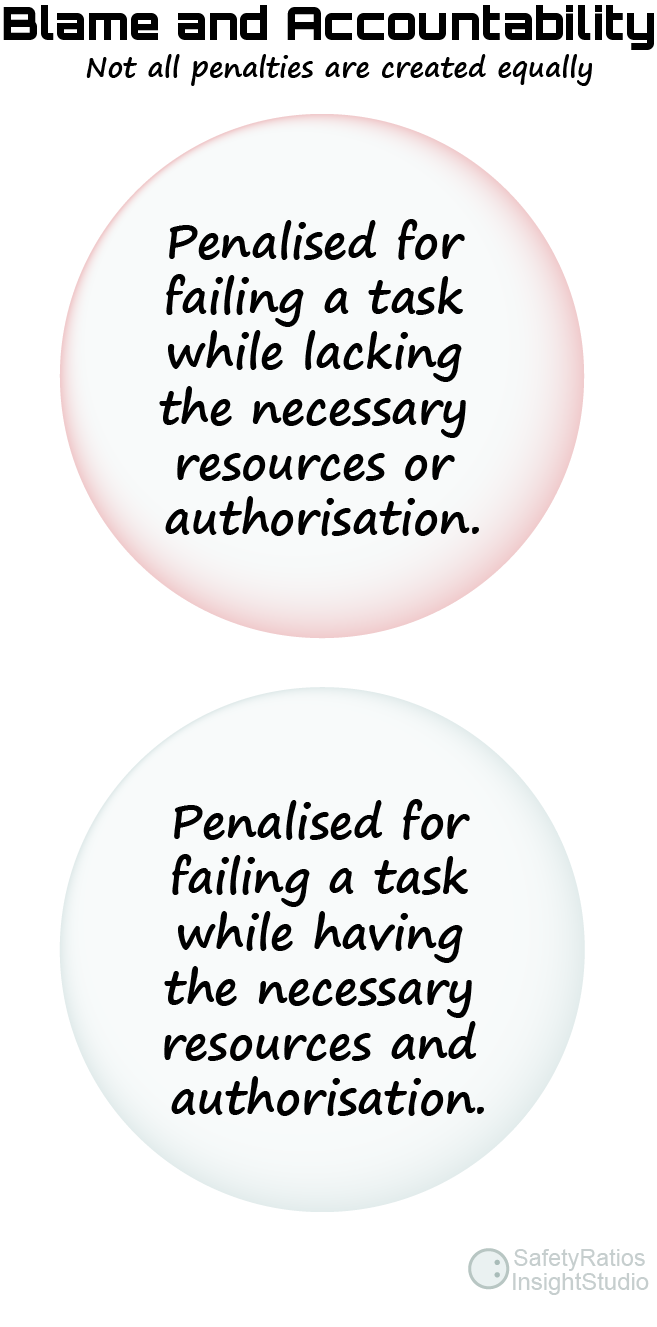
Accountability differs from blame because it is typically predefined and transparent. It identifies who is responsible for ensuring that specific tasks or outcomes are delivered. When roles and responsibilities are clearly defined, individuals understand what is expected of them.
Effective accountability also requires authority and resources. Individuals who are accountable for outcomes must have the means to influence the processes and conditions that determine those outcomes.
In structured safety management systems, accountability provides clarity for both operational teams and investigators. When incidents occur, clearly defined responsibilities allow organisations to analyse system weaknesses rather than simply searching for individuals to blame.
The Role of Accountability in Safety Culture
A transparent safety culture depends on trust and open reporting. When accountability is clear and fair, employees are more likely to share information about hazards, near misses, and operational challenges.
In contrast, environments dominated by blame discourage transparency. Employees may conceal minor problems in order to avoid scrutiny, allowing small weaknesses to grow into larger risks.
Strong safety systems therefore balance accountability with fairness. They focus on learning from events while maintaining clear responsibilities for managing hazards and risks.
Balancing Accountability and Learning
Effective safety management requires systems that support both accountability and organisational learning. Clear roles, transparent processes, and structured investigations help ensure that incidents lead to improvements rather than blame.
By emphasising accountability instead of blame, organisations can create safer environments where issues are identified early and addressed systematically.
Frequently Asked Questions
What is the difference between accountability and blame in safety management?
Accountability refers to clearly defined responsibility for outcomes or tasks, while blame is the act of assigning fault after an event occurs, often without a structured or transparent process.
Why is blame culture harmful in workplace safety?
Blame culture discourages employees from reporting hazards, mistakes, and near misses because they fear punishment. This prevents organisations from learning from small issues before they develop into serious incidents.
How does accountability improve safety management systems?
Accountability clarifies who is responsible for specific safety outcomes. When roles and responsibilities are clearly defined, organisations can manage risks more effectively and conduct more meaningful investigations after incidents.
What is hindsight bias in safety investigations?
Hindsight bias occurs when people judge past decisions using knowledge gained after an incident occurred. This can lead to unfair criticism of individuals who made decisions without access to that information at the time.
Can accountability exist without blame?
Yes. Accountability can be implemented through clear roles, responsibilities, and transparent processes that focus on learning and improvement rather than punishment.